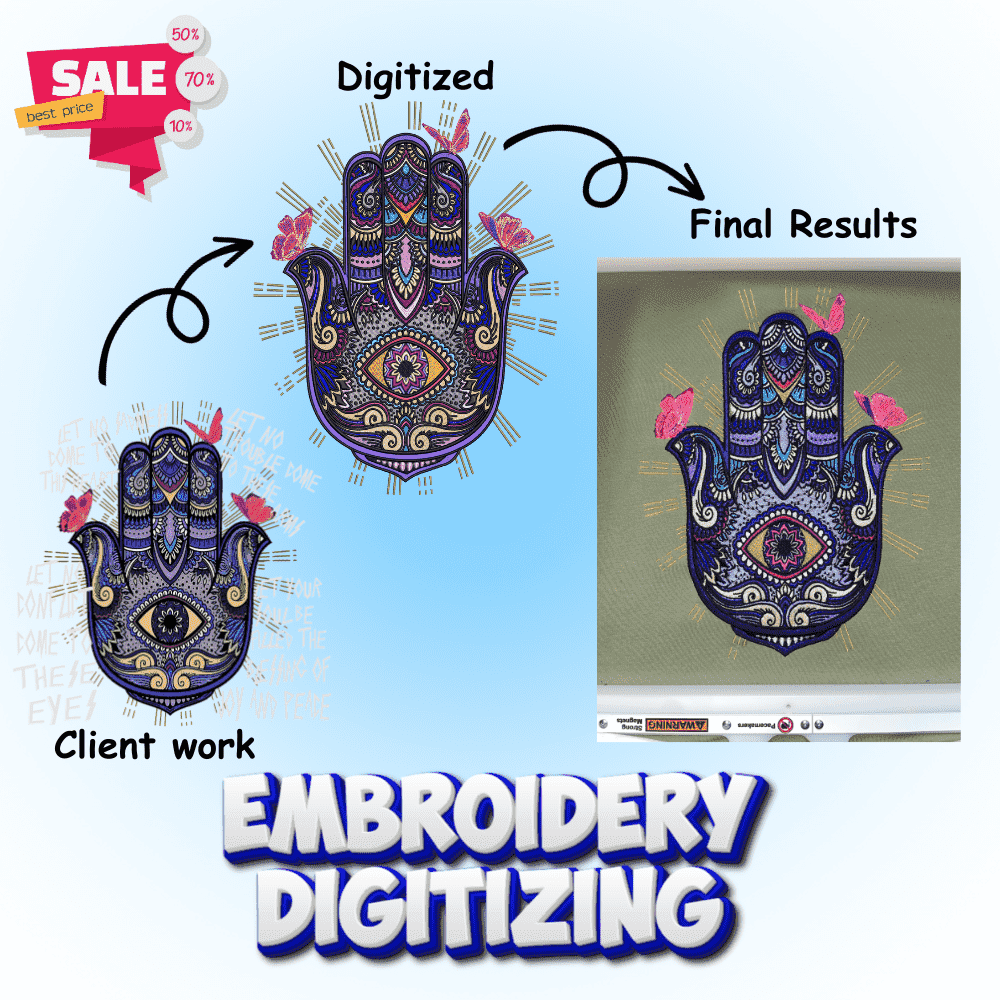
Embroidery digitizing is not just about converting artwork into stitches it’s about controlling how those stitches behave on fabric. One of the most crucial yet often underestimated elements of high-quality embroidery digitizing is the underlay stitch. While underlay stitches are hidden beneath the top stitches and never meant to be seen, their impact on embroidery quality is enormous.
From preventing fabric distortion to improving stitch clarity and durability, underlay stitches serve as the backbone of professional embroidery. In this article, we’ll explore the role of underlay stitch in embroidery digitizing, explain different underlay types, discuss best practices, analyze competitor content, and highlight how proper underlay can elevate embroidery results.
What Is an Underlay Stitch in Embroidery Digitizing?
An underlay stitch is a foundational layer of stitches sewn directly onto the fabric before the main embroidery stitches. In embroidery digitizing, underlay stitches are programmed to stabilize the fabric, prepare the surface, and support the visible top stitches.
Underlay stitches act as a base structure, helping embroidery machines place top stitches more accurately and consistently. Although they remain invisible in the final design, underlay stitches directly influence the appearance, feel, and longevity of embroidery.
Secondary keywords naturally related to underlay include:
- embroidery underlay stitching
- underlay types in embroidery
- embroidery digitizing techniques
- fabric stabilization in embroidery
- stitch foundation in digitizing
Why Underlay Stitch Is So Important in Embroidery Digitizing
Many embroidery problems such as puckering, poor coverage, uneven stitches, and thread breaks are often blamed on machines or thread quality. In reality, poor or missing underlay is frequently the root cause.
1. Fabric Stabilization
One of the primary roles of underlay stitching is stabilizing the fabric. When embroidery stitches penetrate fabric, they create tension that can cause stretching, shrinking, or distortion. Underlay stitches help secure the fabric to the stabilizer and minimize movement during stitching.
This is especially critical for:
- Stretch fabrics (knits, jerseys)
- Lightweight materials
- Uneven or textured fabrics
2. Preventing Puckering and Distortion
Without proper underlay, top stitches pull the fabric inward, leading to puckering. Underlay stitches distribute stitch tension evenly, allowing embroidery to lie flat and smooth.
3. Improving Stitch Definition and Sharpness
Underlay stitches lift the top stitches slightly, preventing them from sinking into the fabric. This results in:
- Sharper lettering
- Cleaner satin stitch edges
- Better logo clarity
Professional digitizers rely heavily on underlay to maintain crisp outlines and professional finishes.
4. Enhancing Thread Coverage
Underlay stitches create a uniform surface for top stitches, improving coverage and reducing visible fabric gaps. This is particularly important for:
- Large filled areas
- Light-colored thread on dark fabric
- Satin stitches on textured materials
5. Increasing Embroidery Durability
A well-constructed underlay improves stitch anchoring, making embroidery more resistant to wear, washing, and repeated use. This is essential for uniforms, workwear, caps, and promotional garments.
Types of Underlay Stitches in Embroidery Digitizing
Different embroidery designs and fabrics require different underlay styles. Understanding these types allows digitizers to select the best underlay for each project.
1. Center Run Underlay
A simple straight stitch placed along the center of a design area.
Best for:
- Small text
- Narrow satin stitches
- Lightweight fabrics
Purpose:
- Light stabilization
- Minimal bulk
- Reduced fabric movement
2. Edge Run (Contour) Underlay
A running stitch placed just inside the outline of a shape.
Best for:
- Lettering
- Satin stitch borders
- Logo outlines
Purpose:
- Defines edges
- Prevents satin stitches from spreading
- Improves shape accuracy
3. Zigzag Underlay
Zigzag stitches that span across the design area.
Best for:
- Wide satin stitches
- Medium to heavy fabrics
- 3D puff embroidery
Purpose:
- Strong fabric support
- Lifts top stitches
- Improves stitch density appearance
4. Tatami (Fill) Underlay
A light fill stitch used beneath large filled areas.
Best for:
- Large embroidery fills
- Heavy or textured fabrics
Purpose:
- Prevents fabric show-through
- Adds structure
- Improves uniform stitch coverage
5. Combination Underlay
A mix of multiple underlay types used together.
Best for:
- Professional logos
- Complex embroidery designs
- High-density stitching
Purpose:
- Maximum stabilization
- Optimal stitch clarity
- Enhanced durability
Role of Underlay Stitch for Different Fabric Types
One major gap in competitor articles is fabric-specific guidance. Underlay must always be adjusted based on material.
Lightweight Fabrics
- Use minimal underlay
- Prefer center run or light edge run
- Avoid heavy zigzag underlay
Stretch Fabrics
- Zigzag underlay is essential
- Combine with cut-away stabilizer
- Reduce stitch density slightly
Heavy Fabrics
- Strong zigzag or tatami underlay
- Increased stitch length
- Ensure proper needle penetration
Caps and Structured Hats
- Firm edge run underlay
- Directional underlay for curves
- Prevent distortion on curved surfaces
Best Practices for Underlay Stitch in Embroidery Digitizing
To maximize embroidery quality, professional digitizers follow these best practices:
- Always customize underlay instead of relying on automatic settings
- Match underlay density to fabric thickness
- Keep underlay stitches slightly shorter than top stitches
- Avoid overlapping underlay excessively
- Test stitch samples before production
- Adjust underlay angle for complex shapes
Using the correct underlay settings significantly reduces production errors and improves machine efficiency.
Common Underlay Stitch Mistakes to Avoid
Many embroidery digitizers especially beginners make avoidable mistakes:
- Skipping underlay to save stitch count
- Using overly dense underlay that stiffens fabric
- Applying the same underlay for every fabric
- Relying completely on software auto-digitizing
- Ignoring test sew results
Avoiding these mistakes leads to cleaner embroidery and fewer customer complaints.
Why Underlay Stitch Separates Amateur and Professional Digitizing
Underlay stitch is one of the biggest differences between amateur embroidery and professional digitizing services. Well-planned underlay improves:
- Visual quality
- Production speed
- Stitch consistency
- Machine performance
- Customer satisfaction
Professional embroidery digitizers understand that underlay is not optional, it’s essential.
Conclusion
The role of underlay stitch in embroidery digitizing cannot be overstated. Although invisible in the final product, underlay stitches determine how embroidery looks, feels, and performs. From stabilizing fabric and improving stitch definition to preventing puckering and enhancing durability, underlay serves as the foundation of high-quality embroidery.
By mastering underlay stitch types, fabric-specific adjustments, and best digitizing practices, embroiderers can achieve consistently professional results. Whether you’re digitizing logos, lettering, or complex designs, investing time in proper underlay planning will dramatically improve your embroidery outcomes.
FAQs
What is an underlay stitch in embroidery digitizing?
An underlay stitch is a foundational layer of stitches placed beneath the visible embroidery stitches.
What is the purpose of underlay in embroidery?
Embroidery appearance and quality depends a lot on the underlay which serves as a foundation for cover stitching.
Why is underlay stitch important in embroidery digitizing?
Underlay stitch is important because it prevents puckering, controls fabric movement, improves stitch definition, enhances thread coverage, and increases embroidery durability.
What is the function of underlay?
It serves as a protective layer between the ‘unfinished’ subfloor and the final floor covering.
How to use underlay?
Each piece of underlay should be laid side by side, with the edges butting up against each other but without overlapping.
What is 13 stitches?
13 Stitches is a 7-inch EP by NOFX.
Which underlay stitch is best for satin stitches?
For satin stitches, a combination of center run underlay and edge run underlay is commonly used. For wider satin areas, zigzag underlay provides better support and stitch elevation.
How does underlay stitch affect embroidery on stretch fabrics?
On stretch fabrics, underlay stitch helps control stretching and fabric movement.