Embroidery digitizing and vector art play a vital role in modern embroidery, serving as innovative solutions for businesses and hobbyists alike. This guide offers a thorough exploration of these processes, encompassing both fundamental concepts and advanced techniques to help users create high-quality, professional designs.
What Is Embroidery Digitizing?
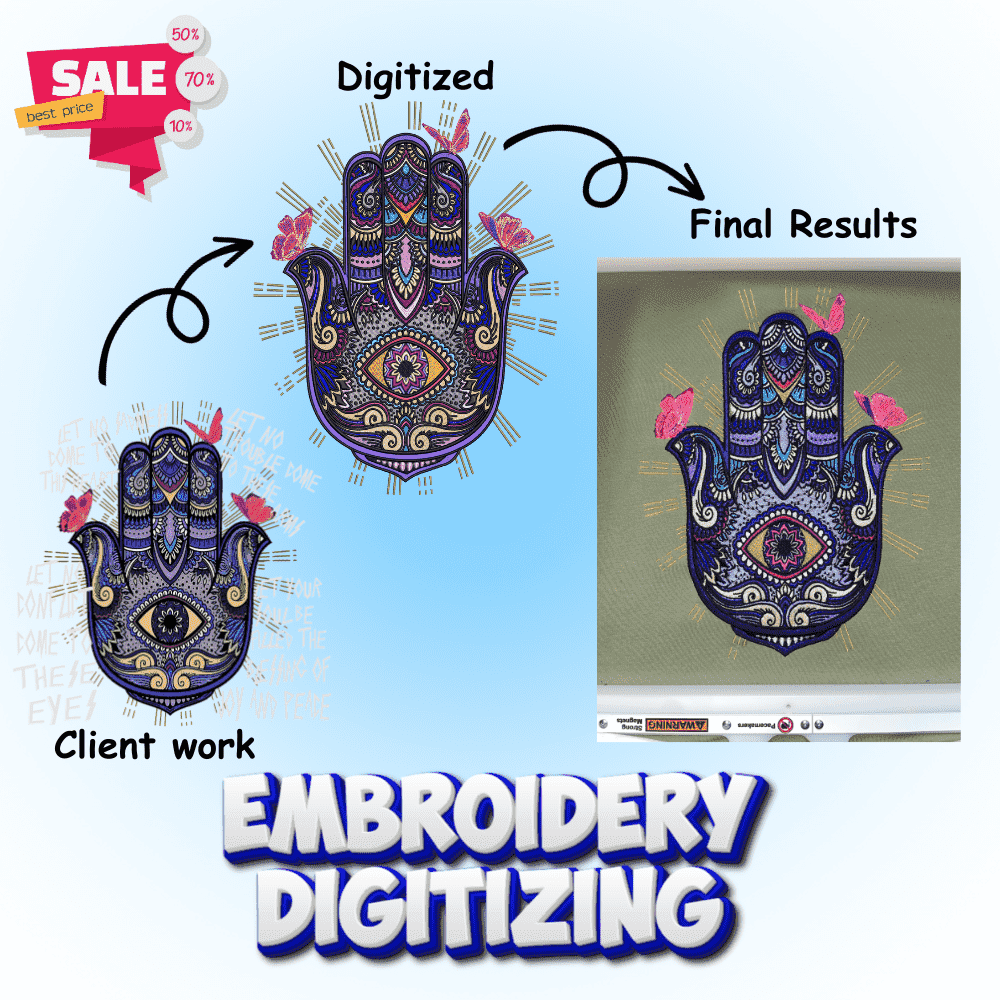
Embroidery digitizing is the conversion of artwork into stitch-based digital files for embroidery machines, focusing on stitch behavior rather than design appearance. Unlike graphic design, digitizing involves commands for needle movement, stitch direction, type and density, which are processed by digitizing software that translates designs accordingly.
Key Characteristics of Embroidery Digitizing
- Uses stitches instead of lines or pixels
- Created specifically for embroidery machines
- Requires technical knowledge of fabrics and threads
- Produces machine-ready embroidery files
- Focuses on durability, stitch flow and clean embroidery output
Common Embroidery File Formats
- DST
- PES
- JEF
- EXP
- VP3
Each format works with specific embroidery machine brands like Tajima, Brother, Janome, or Bernina.
How Embroidery Digitizing Works
Embroidery digitizing is a manual and technical process, not an automatic conversion. A professional digitizer considers many factors to ensure the design stitches properly.
Steps Involved in Embroidery Digitizing
- Analyzing the artwork for embroidery feasibility
- Selecting suitable stitch types (satin, fill, running)
- Setting stitch direction to enhance design shape
- Adjusting stitch density to avoid fabric damage
- Adding underlay stitches for stability
- Compensating for fabric stretch and pull
- Testing the design on actual fabric
Without proper digitizing, embroidery may look distorted, uneven or unprofessional.
What Is Vector Art?
Vector art is created using mathematical equations, allowing for scaling without loss of quality, unlike raster images. It is crucial in embroidery for maintaining design clarity and detail at any size.
Key Characteristics of Vector Art
- Resolution-independent (can be scaled up or down)
- Clean, smooth lines
- Ideal for printing and cutting
- Created using graphic design software
- Maintains consistent quality at any size
Common Vector File Formats
- AI
- EPS
- SVG
- CDR
Vector art is essential for screen printing, vinyl cutting, heat transfer printing, and laser engraving.
How Vector Art Works
Vector art is created by drawing shapes and lines using points and curves. These shapes are defined mathematically, which allows perfect resizing without distortion.
Steps Involved in Vector Art Creation
- Converting raster images into vector paths
- Cleaning up rough edges and unnecessary points
- Separating colors for printing
- Refining shapes and outlines
- Exporting the final scalable vector file
Vector art focuses on design accuracy and visual appeal, not machine stitching.
When Should You Use Embroidery Digitizing?
Embroidery digitizing services are essential when your design will be stitched on garments or accessories. These files include stitch types, angles, and underlay details that ensure clean, crisp embroidery.
Use embroidery digitizing services for:
- Left chest digitizing for polos, uniforms, and business shirts
- Jacket back digitizing for large artwork or detailed logos
- Towel digitizing where thread density needs adjusting for thick nap
- Embroidery caps online that need precise stitching on curved surfaces
- 3D embroidery digitizing for puff logos on hats and sports gear
- Custom embroidery digitizing tailored for specific garments and fabrics
When Should You Use Vector Art?
Vector art services are ideal when your artwork is intended for printing, scaling, cutting, or engraving. Vectors ensure clean lines, no pixelation and easy modification.
Use vector conversion for:
- Company logos for business cards, banners, and websites
- Designs for screen printing or sublimation on t-shirts
- Decals and signage that need clean-cut lines
- Laser engraving on plaques or tags
- Converting hand-drawn sketches into digital graphics
Can Vector Art Be Used for Embroidery?
This is a common misconception.
- Vector art cannot run directly on embroidery machines
- It does not contain stitch information
However, vector art is often used as the base design for embroidery digitizing. A digitizer uses the vector file to manually create stitches, but the final embroidery file is completely different.
Do You Need Both Embroidery Digitizing and Vector Conversion?
Many businesses need both services, especially if they use the same logo for different purposes like printing and embroidery design. For example:
- A coffee shop may need a vector logo for menus, signs, and business cards, but also require custom embroidery digitizing for aprons and staff shirts.
- A school may need towel digitizing for sports towels, left chest digitizing for uniforms, and vector files for event banners.
Using both services ensures consistent branding across all materials, from fabric to print.
Cost Difference
- Embroidery digitizing is usually priced based on stitch count, size, and complexity
- Vector art pricing depends on design detail and cleanup level
Digitizing often costs more because it requires technical embroidery expertise, not just graphic design skills.
Quality Differences
Embroidery Digitizing Quality Depends On:
- Correct stitch type selection
- Balanced stitch density
- Proper underlay stitching
- Fabric compensation
- Clean stitch paths
Poor digitizing can cause:
- Thread breaks
- Fabric puckering
- Misaligned designs
- Unprofessional appearance
Vector Art Quality Depends On:
- Smooth paths
- Accurate color separation
- Proper line thickness
- Clean edges
Poor vector art results in:
- Jagged prints
- Cutting errors
- Inconsistent branding
Cost Difference Between the Two
- Embroidery digitizing is usually priced based on stitch count, size and complexity
- Vector art pricing depends on design detail and cleanup level
Digitizing often costs more because it requires technical embroidery expertise not just graphic design skills.
Which One Is Better?
Neither embroidery digitizing nor vector art is better on its own. Each serves a different purpose.
- Choose embroidery digitizing for stitched designs
- Choose vector art for printed or cut designs
- Choose both for complete branding solutions
Professional businesses use vector art for marketing and printing, and digitized files for embroidery.
Conclusion
Understanding the difference between embroidery digitizing and vector art is essential for anyone involved in custom apparel, branding or promotional products. While vector art focuses on visual perfection and scalability, embroidery digitizing focuses on stitch accuracy and fabric behavior.
They are not interchangeable, but they complement each other. Using the right format for the right process ensures professional results, saves time and protects your brand identity.
If you want consistent high-quality output across embroidery and print, always invest in professional digitizing and vector art services.
FAQs
1. What is the main difference between embroidery digitizing and vector art?
Embroidery digitizing creates stitch files for embroidery machines, while vector art creates scalable designs for printing and cutting.
2. Can vector art be used directly for embroidery?
No, vector art must be digitized into stitch files before embroidery.
3. Is embroidery digitizing just image conversion?
No, it involves manual stitch planning, direction, and density control.
4. Why is vector art important for printing?
Because it scales without losing quality, ensuring sharp prints.
5. Which file formats are used for embroidery digitizing?
Common formats include DST, PES, JEF, and EXP.
6. Which file formats are used for vector art?
Popular vector formats are AI, EPS, SVG, and PDF.
7. Can one design be used for both embroidery and printing?
Yes, but in separate formats digitized for embroidery and vector for print.
8. Which costs more: digitizing or vector art?
Embroidery digitizing usually costs more due to its technical nature.
9. What happens with poor embroidery digitizing?
It can cause thread breaks, puckering, and messy stitches.
10. Do I need both services?
Yes, for complete and consistent branding.